

Calculating and comparing health or social statistics for populations can be tricky, time consuming and usually requires advanced statistical skills.Mātau is an easy to learn tool that enables rapid calculation and comparison of robust population statistics without additional software or specialist statistical skills. No statistical calculation or coding are required to produce tables, graphs and even maps.
Funded by: iNZight Analytics
It can be used for any outcome statistics in any geographical area or time period using either aggregate data (counts) or unit record file data. Comparisons can be made between population outcomes over time, between regions or by ethnicity, age or sex. Pull down menus and interactive graphics are used to producing statistically robust calculations and comparisons including confidence intervals. Multiple options for analysis can be selected from the menu if required but the default setting on menus is the standard approach allowing Mātau produces results in the form of tables, graphs and maps with all output exportable in multiple formats so they can be easily included in offline reports.
An early version of Mātau was used for estimation of regional ethnic- and age-specific COVID-19 outcomes near the beginning of the pandemic in early 2020, and presented to the New Zealand Government for policymaking. The Mātau app is currently being redeveloped using updated Ministry of Health data.


iNZight is a free and accessible statistical visualisation software. Founded by Chris Wild of the University of Auckland, development of iNZight is now lead by Tom Elliott of iNZight Analytics.
The software was initially designed for New Zealand high schools, allowing students to quickly and easily explore data and understand basic statistical ideas using the companion program VIT. However, iNZight now extends to multivariable graphics, time series, and generalised linear modelling, including modelling of data from complex surveys.
iNZight is free. That means you can download and use it however you want, for whatever you want. There are absolutely no restrictions. You can download for yourself or redistribute it. You can even modify it if you are so inclined! However, it is important to note that iNZight comes with absolutely no warranty.

Pacific peoples are often treated as a single group for the purpose of reporting on health outcomes in New Zealand, but this ignores the diversity between specific Pacific ethnic populations.
This report summarises work conducted using Statistics New Zealand’s (Stats NZ) Integrated Data Infrastructure (IDI) to better capture this diversity and enable more accurate reporting on cancer outcomes (all cancers and stomach cancer) among those who identify with “Level 2” Pacific ethnicities: Samoan, Cook Islands Māori, Tongan, Niuean, Tokelauan & Fijian.
This work was supported as part of a Health Research Council (HRC) Programme Grant 17/610 led by Professor Parry Guilford at the University of Otago.
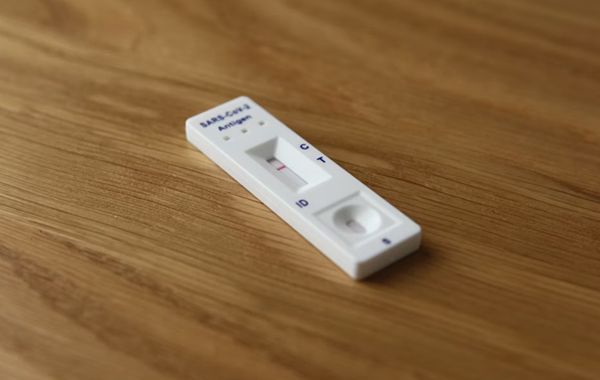
The COVID-19 pandemic highlighted and exacerbated health inequities between Māori and other New Zealanders. These inequities were predicted by early disease outcome modelling, demonstrated after the second outbreak, and inspired a robust equity-driven vaccination prioritisation strategy the Government was slow to adopt. Central Government’s failure to pro-actively focus on preventing inequity has been the subject of two High Court cases and an urgent Treaty of Waitangi hearing: the predicted inequity occurred and is now routinely reported at a national level in Crown health data.
Alongside the National Hauora Coalition, iNZight Analytics has produced a number of reports on the use of Crown data to improve COVID-19 outcomes for Māori.
Initial report commissioned by: National Hauora Coalition
Additional resourcing from: iNZight Analytics
The initial report from focused on using Crown data to highlight potential focuses of Crown action to improve COVID-19 outcomes for Māori. We put a Te Tiriti lens on the available data to also provide information on how policy amenable factors relate to COVID-19 outcomes, with the aim of identifying potential policy targets that could reduce future health inequities faced by Māori. The report begins with a demonstration of the inequity between Māori/non-Māori and the association of these inequities with area-based social deprivation as measured by the NZ Deprivation Index. However, the intent of was report is to highlight government policy targets, so we then examine whether household and individual factors are associated with good or poor outcomes for Māori specifically.
This report used data in the Stats NZ Integrated Data Infrastructure (IDI) to quantify and examine inequities with respect to four COVID-19 outcomes: testing positive, hospitalisations, deaths, and vaccination status. This involve dall the available data in the IDI for the entire duration of the pandemic in Aotearoa (as at October 2023) that can be linked at an individual level. This was the first time such a comprehensive analysis of COVID-19 inequity for Māori has been done in Aotearoa. This report is not available to the public.
A technical report of the methods used for this work was later published by iNZight Analytics: More than just living in a deprived area: an equity-focused analysis of policy amenable factors associated with Māori COVID-19 outcomes. This is available for download in the links section.
Got a project idea? Let's work together
Get in touch